
The first time I tasted Japchae, I was whisked away to the bustling streets of Seoul, where the vibrant aromas of savory dishes beckon at every corner. This classic Korean stir-fried dish transforms simple sweet potato glass noodles into a culinary delight that harmonizes chewy textures with a medley of fresh vegetables and tender protein options, creating a balance that’s hard to resist. Not only is this Japchae recipe a feast for the eyes, but it’s also incredibly versatile—customize it with your favorite proteins like chicken, tofu, or even shrimp to suit your tastes. Whether you’re hosting friends or simply craving a comforting meal, Japchae delivers on both flavor and nutrition. So, what twist will you give this beloved dish?
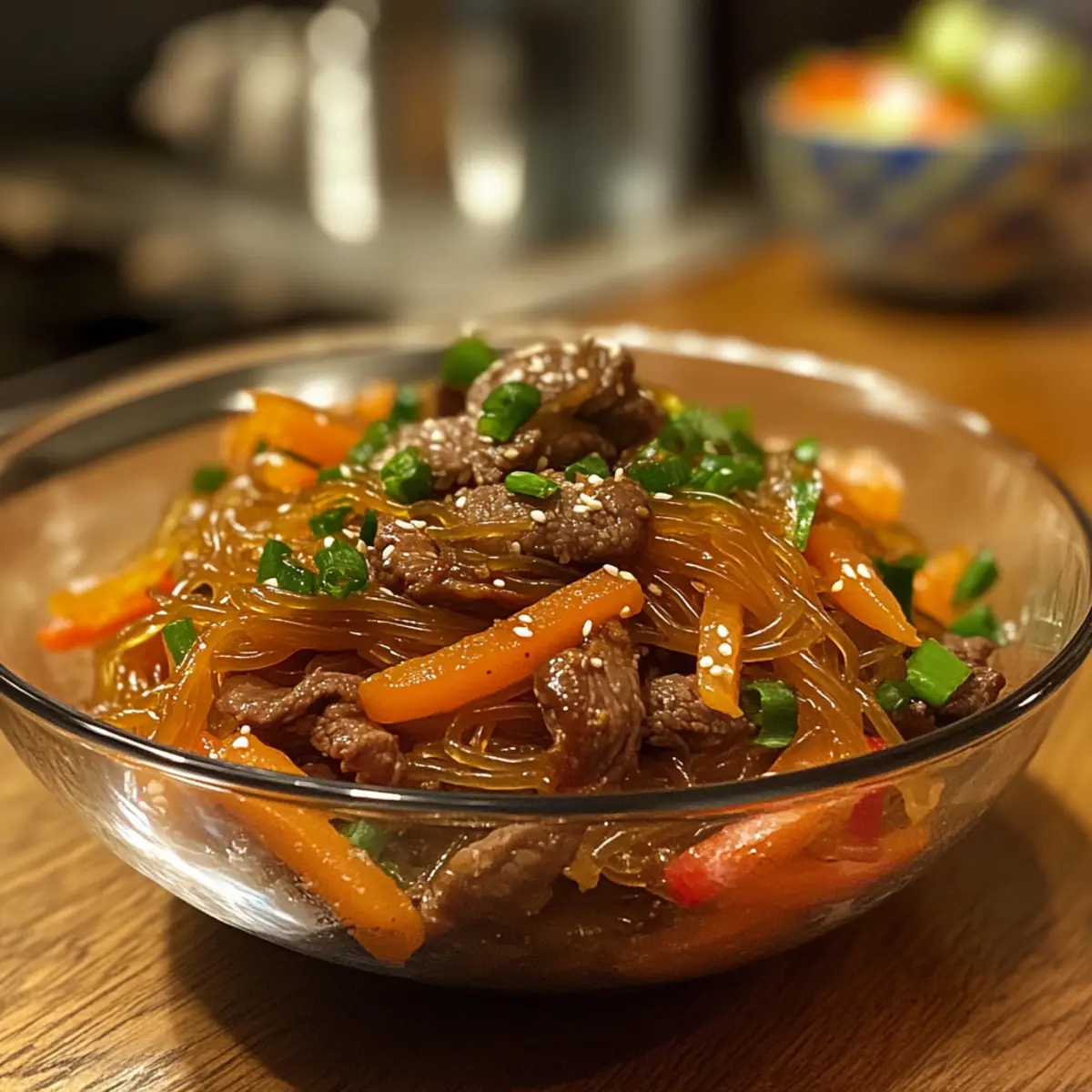
Why is Japchae a Must-Try Dish?
Flavor Explosion: Japchae is a delightful blend of sweet, savory, and nutty flavors that will tantalize your taste buds.
Quick Preparation: Cooking this dish is surprisingly fast, making it perfect for busy weeknights or spontaneous gatherings.
Customizable: You can customize it with various proteins like beef, chicken, or tofu, allowing everyone to enjoy their preferred option.
Health-Conscious: With fresh vegetables and gluten-free noodle options, it’s a nutritious meal without sacrificing taste.
Festive Appeal: Traditionally enjoyed during celebrations, this dish brings a sense of warmth and festivity to any table.
Japchae Ingredients
• Create your flavorful Japchae using these essentials and enjoy a delightful culinary experience.
For the Noodles
- Sweet Potato Glass Noodles – The star ingredient providing that unique chewy texture; swap for rice noodles to enjoy a gluten-free option.
For the Protein
- Beef – Opt for tender cuts for rich flavor; chicken or tofu works wonderfully as substitutes based on your preference.
For the Vegetables
- Carrots – Adds a natural sweetness and color; feel free to mix in zucchini or snap peas for more variety.
- Bell Peppers – Brightens the dish with freshness; any color works for added vibrancy and flavor.
- Spinach – A nutritious touch that wilts beautifully into the dish; switch with kale if desired.
For the Seasoning
- Soy Sauce – The key to that signature umami taste; opt for low-sodium for a healthier profile.
- Sesame Oil – Infuses a toasty, nutty aroma throughout the dish; can substitute with olive oil, noting a change in flavor.
- Green Onions – Provide a fresh, mild onion flavor; these can be omitted if not on hand.
- Garlic (optional) – Elevates flavor with a punch; choose fresh or powdered based on what’s available.
Step‑by‑Step Instructions for Japchae
Step 1: Prep Noodles
Begin by soaking the sweet potato glass noodles in hot water for about 30 minutes. After they’ve softened, drain the noodles and set them aside. They should be pliable but still chewy, which is key to achieving the perfect texture in your Japchae.
Step 2: Stir-Fry Protein
Heat a tablespoon of sesame oil in a large skillet or wok over medium-high heat. Add your choice of beef, chicken, or tofu, cooking until browned and fully cooked, which should take about 5 to 7 minutes. Once done, remove the protein from the skillet and keep it warm on a plate while you prepare the vegetables.
Step 3: Cook Vegetables
In the same skillet, add a drizzle of more sesame oil if necessary, then toss in sliced carrots and bell peppers. Stir-fry these vibrant veggies for about 3 to 5 minutes until they become tender yet still crisp. Incorporate spinach near the end to let it wilt, enhancing the visual appeal and nutritional profile of your Japchae.
Step 4: Combine Ingredients
Return the cooked protein to the skillet with the sautéed vegetables. Add the drained glass noodles back in, mixing everything well to ensure a thorough combination. Use tongs or chopsticks for easier handling, ensuring that each ingredient melds beautifully together in this colorful Japchae dish.
Step 5: Season
Pour in a generous splash of soy sauce over the combined ingredients, adjusting to taste. You may also add a teaspoon of sugar for a hint of sweetness if desired. Drizzle another tablespoon of sesame oil for extra flavor, and stir-fry everything for another 2-3 minutes until everything is heated through and glistening.
Step 6: Garnish
Finally, sprinkle chopped green onions over the prepared Japchae. This adds a fresh finish and additional crunch to the dish. Serve your delicious Japchae warm, and enjoy this mouthwatering Korean comfort food that pairs perfectly with a variety of dishes!
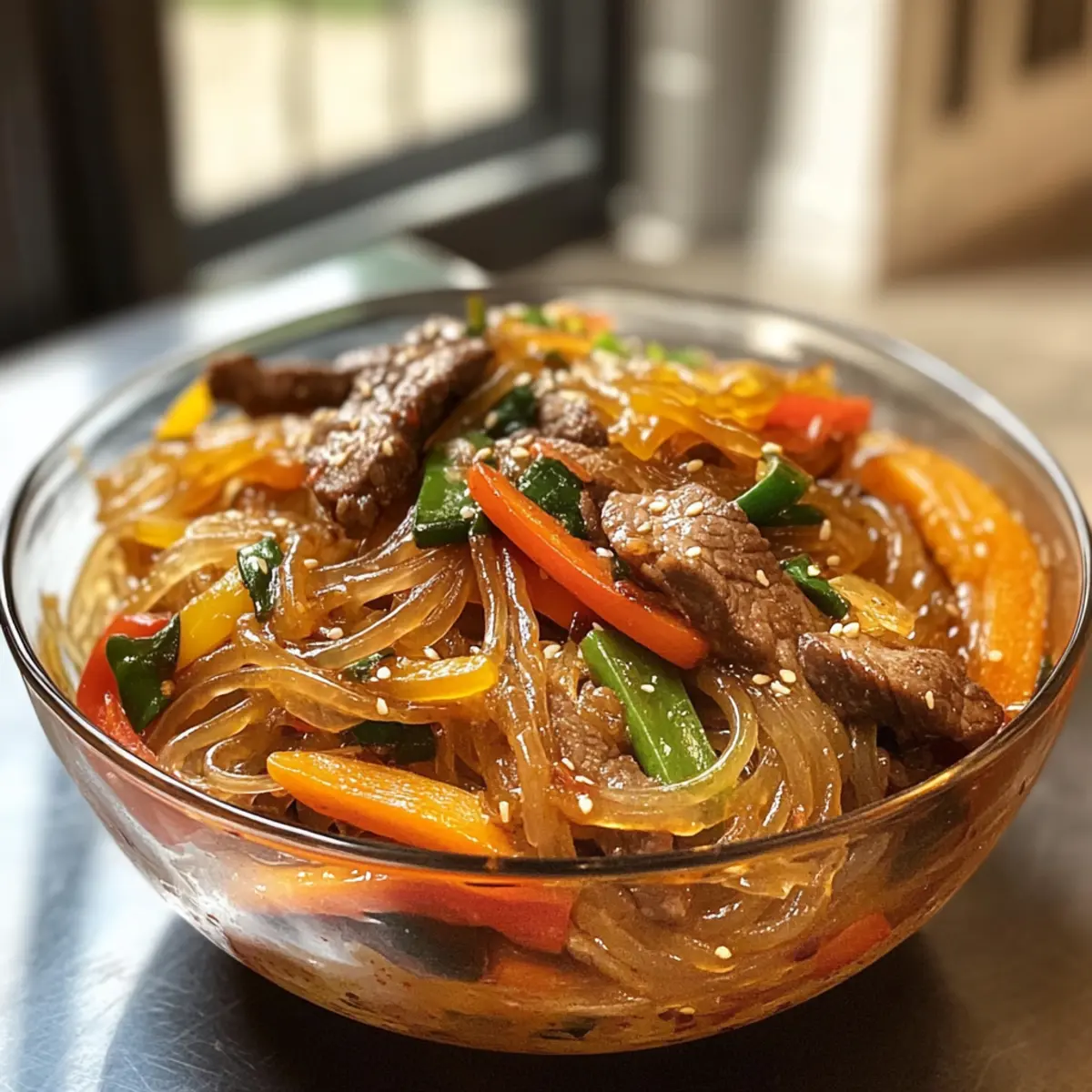
What to Serve with Classic Japchae?
Whether you’re savoring this beloved dish at a family gathering or a quiet evening at home, complementing it with the right sides can create a truly memorable meal.
- Kimchi: This spicy fermented dish adds a delightful tang that cuts through the richness of Japchae.
- Crispy Spring Rolls: Their crunchy texture contrasts beautifully with the chewy noodles, making each bite interesting.
For a heartier option, consider serving stir-fried vegetables on the side. These vibrant veggies not only enhance the meal’s nutrition but also provide more flavor complexity.
-
Sesame Green Beans: These tender green beans bring a nutty aroma that pairs well with the garlicky notes of the Japchae.
-
Steamed Bok Choy: A light and refreshing side that balances out the richness of the noodles while adding a touch of elegance.
-
Chilled Soba Noodles: A refreshing option with a nutty flavor, they can be drizzled with soy sauce for added depth.
-
Miso Soup: Warm and soothing, this broth provides a comforting element alongside the savory elements of Japchae.
-
Honeydew Melon Slices: A sweet and cool finish to the meal, these juicy bites cleanse the palate after the flavors of the main dish.
Storage Tips for Japchae
- Room Temperature: Enjoy Japchae fresh; if left out for more than 2 hours, it’s best to refrigerate to maintain quality.
- Fridge: Store leftovers in an airtight container in the refrigerator for up to 3 days. Reheat gently in the microwave or on the stovetop, stirring occasionally to preserve texture.
- Freezer: If needed, freeze Japchae in a freezer-safe container for up to 1 month. Wrap tightly to prevent freezer burn, and thaw in the fridge before reheating.
- Reheating: When reheating, add a splash of water or soy sauce to restore moisture, ensuring your flavorful Japchae remains delicious and enjoyable!
Expert Tips for Perfect Japchae
-
Noodle Texture: Ensure the noodles are fully hydrated but still chewy; overcooking can lead to mushy textures, ruining your Japchae experience.
-
Protein Selection: Choose tender cuts of beef or well-pressed tofu for flavor integrity. If using chicken, slice thinly for quicker cooking and juiciness.
-
Veggie Variety: Don’t shy away from mixing in a variety of seasonal vegetables to enhance nutrition and color; just be mindful not to overcrowd your skillet to maintain crispness.
-
Season to Taste: Adjust soy sauce based on sodium preferences; always start with less and add gradually to avoid overwhelming flavors in your Japchae.
-
Garnish for Freshness: Adding green onions at the end not only enhances flavor but also adds a beautiful crunch—consider also sprinkling sesame seeds for extra texture.
-
Efficient Cooking: Have all ingredients prepped and ready before starting to stir-fry; this ensures everything cooks evenly and prevents burning, helping you achieve the perfect Japchae.
Japchae Variations & Substitutions
Feel free to explore these delightful twists for your Japchae, enhancing flavors and accommodating different tastes!
-
Protein Swaps: Substitute beef with chicken, shrimp, or tofu to customize the dish for everyone at the table. Each option brings its unique flavor and texture, allowing you to switch things up regularly.
-
Gluten-Free Alternative: Use rice noodles instead of sweet potato glass noodles for a gluten-free version that maintains a lovely chewiness. Serve it with a sprinkle of toasted sesame seeds for a nutty finish.
-
Add Veggies: Incorporate mushrooms or zucchini for an earthy touch; they pair beautifully with the noodles and absorb the rich flavor of the sauce. Don’t be afraid to experiment with seasonal vegetables either!
-
Heat It Up: Spice things up with a dash of gochujang or your favorite chili paste, adjusting the level of heat to your taste. Just remember, a little goes a long way!
-
Flavor Depth: Mix in some fresh ginger or ginger paste while stir-frying for an aromatic kick that pairs wonderfully with the existing flavors, elevating your dish to new heights.
-
Nutty Aroma: Swapping sesame oil with olive oil will create a different flavor profile, but it’s a great option if you’re looking for something a bit lighter. Just know that your Japchae will lose some of that traditional taste.
-
Tangy Twist: Add a splash of rice vinegar or a squeeze of lime juice at the end for a refreshing bright note that really complements the savory flavors of the dish.
-
Herb Infusion: Toss in some fresh cilantro right before serving for a burst of freshness. It not only enhances flavor but also gives your Japchae a beautiful finishing touch!
If you want to expand your culinary journey, consider pairing your Japchae with a side of kimchi or bulgogi for a complete meal that embodies Korean cuisine. Explore our tips for expert cooking techniques and enjoy every bite!
Make Ahead Options
Preparing Japchae ahead of time makes weeknight meals so much easier! You can soak the sweet potato glass noodles and refrigerate them for up to 24 hours, keeping them in an airtight container to maintain their texture and prevent drying out. Additionally, you can stir-fry the vegetables and protein (beef, chicken, or tofu) in advance—just store them separately in the fridge for up to 3 days. When you’re ready to serve, simply combine everything in a skillet with the noodles, add the soy sauce and sesame oil, and quickly toss over medium heat until warmed through. This way, you’ll enjoy delicious homemade Japchae with minimal effort!
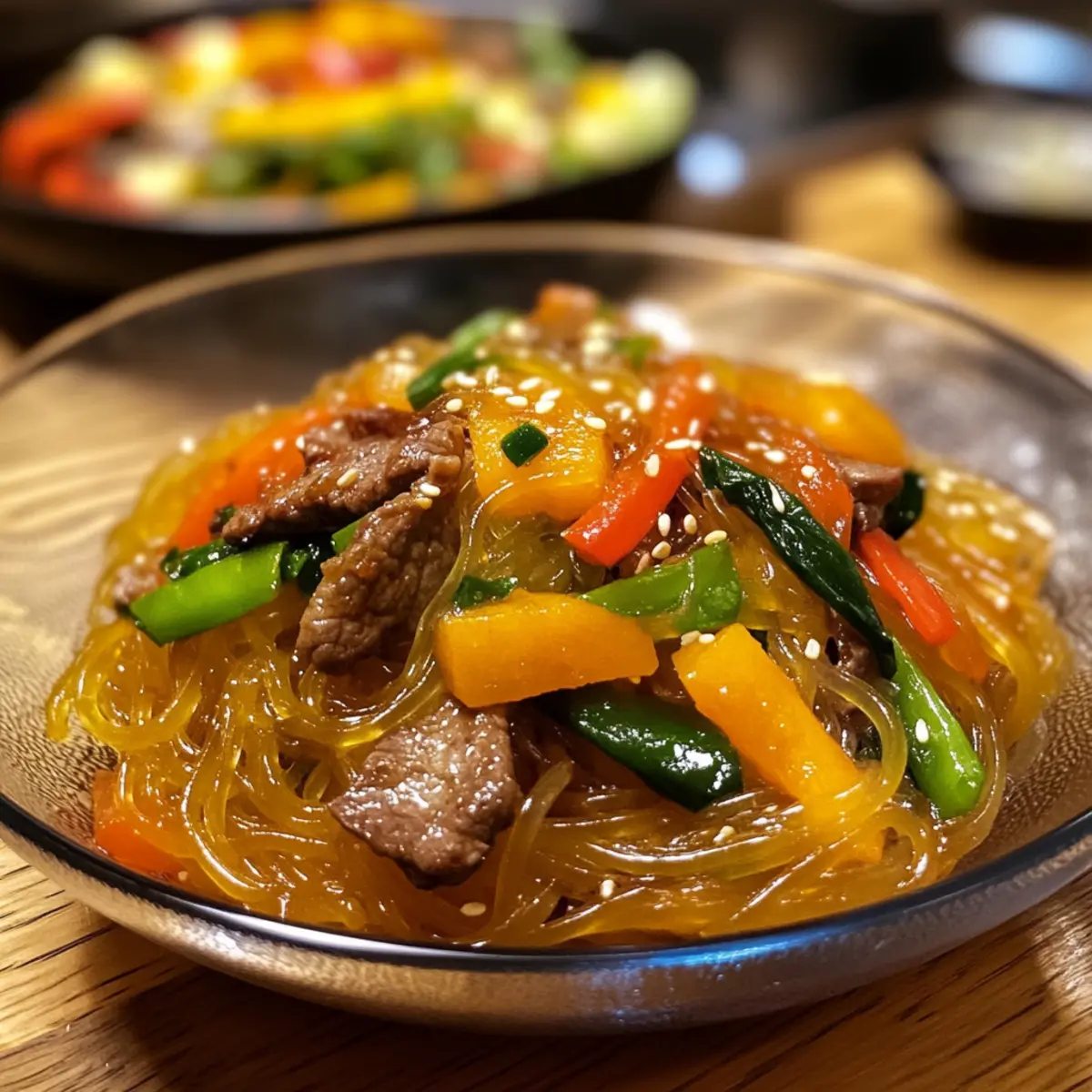
Japchae Recipe FAQs
What kind of noodles should I use for Japchae?
Absolutely! Sweet potato glass noodles are traditional and provide a unique chewiness and texture. However, if you need a gluten-free option, you can substitute them with rice noodles. Just be mindful that the texture will differ slightly.
How should I store leftover Japchae?
Store your leftover Japchae in an airtight container in the refrigerator for up to 3 days. When storing, ensure it cools to room temperature first. Reheat gently in the microwave or on the stovetop, and add a splash of water or soy sauce to maintain moisture.
Can I freeze Japchae, and how should I do it?
Yes, you can freeze Japchae! To freeze, place it in a freezer-safe container, ensuring it’s sealed tightly to prevent freezer burn. It can last for up to 1 month. For best results, thaw in the refrigerator before reheating. When you reheat, add a bit of water or soy sauce to revive its delicious consistency.
What if my noodles become too mushy?
Very! Overcooked noodles can lead to a disappointing texture in your Japchae. To avoid this, soak the sweet potato glass noodles in hot water for the recommended 30 minutes—just until they are pliable, but still firm. If they’re mushy, next time, try reducing soaking time or ensure they’re drained immediately after soaking!
Are there any dietary considerations with Japchae?
Of course! This dish is naturally gluten-free if you use sweet potato glass noodles or rice noodles. It’s also easily customizable for various dietary needs—feel free to swap meat for tofu or vegetables depending on dietary restrictions or preferences. Just be cautious with allergies, especially related to soy and sesame.
Can pets eat Japchae leftovers?
I advise against it! While some ingredients like vegetables are safe for pets, the soy sauce and sesame oil can be too salty for their diets. It’s best to enjoy this delicious Japchae yourself and avoid feeding it to your furry friends.
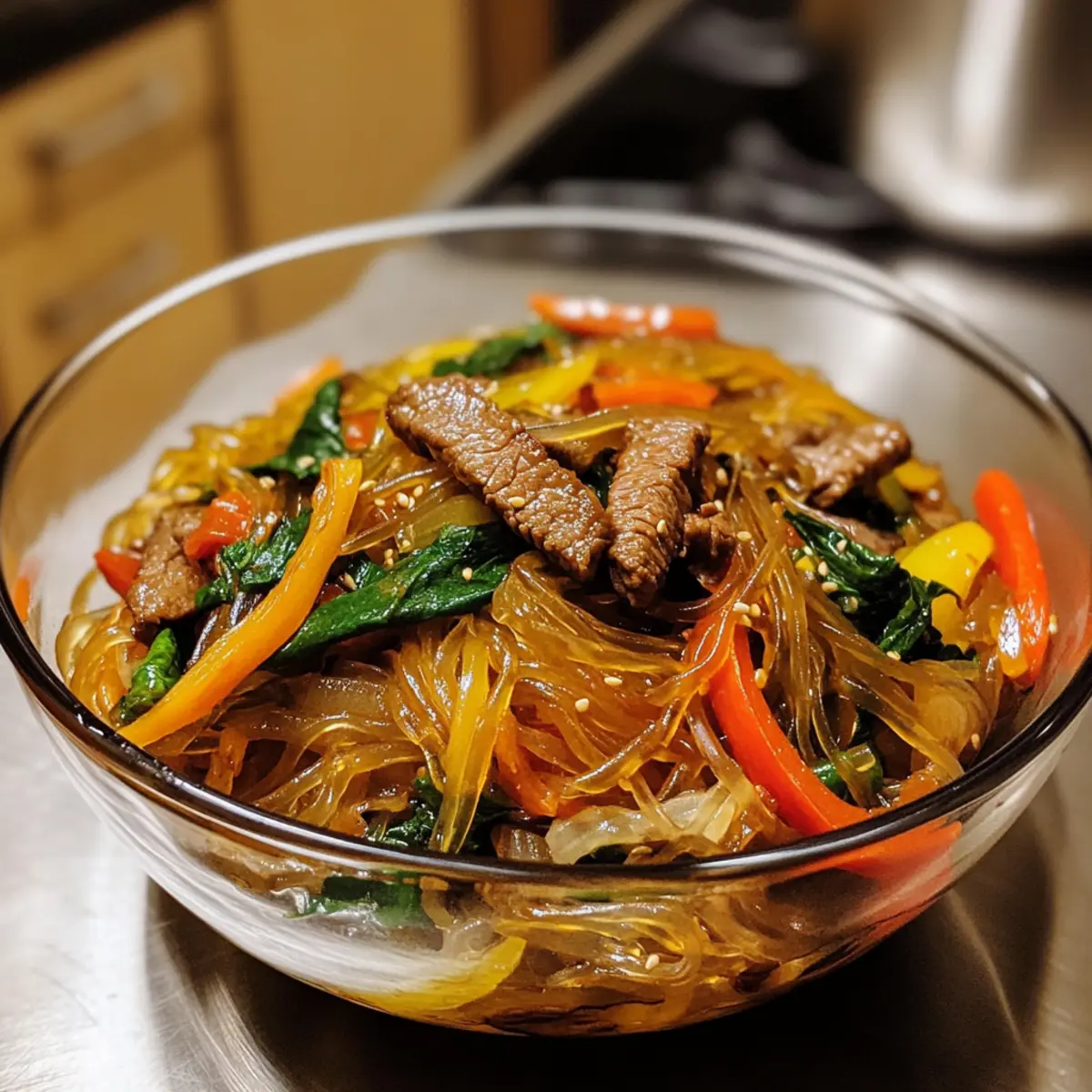
Delicious Japchae: Your Perfect Comfort Food Adventure
Ingredients
Equipment
Method
- Soak the sweet potato glass noodles in hot water for about 30 minutes. Then drain and set aside.
- Heat a tablespoon of sesame oil in a large skillet or wok. Add your choice of protein until browned and fully cooked, about 5 to 7 minutes. Remove and keep warm.
- In the same skillet, add more sesame oil if needed, then stir-fry sliced carrots and bell peppers for 3 to 5 minutes. Add spinach towards the end.
- Return the protein to the skillet with the vegetables. Add the noodles, mixing well for a thorough combination.
- Pour in soy sauce, adjusting to taste. Optionally add sugar and more sesame oil. Stir-fry for another 2-3 minutes until heated through.
- Sprinkle chopped green onions on top before serving warm.
Leave a Reply