
As I watched the vibrant colors of vegetables sizzling in the pan, the wonderful aroma enveloped my kitchen, instantly transporting me to the bustling streets of Seoul. Korean Japchae, a traditional dish beloved for its sweet potato glass noodles, combines an irresistible chewy texture with savory beef and an array of colorful veggies. This easy-to-make stir-fry isn’t just a feast for the senses; it’s incredibly customizable, allowing you to swap in your favorite proteins or even go vegetarian with tofu. Perfect for cozy family dinners or festive gatherings, this dish brings people together over a shared love of homemade cooking. Ready to bring a taste of Korea to your table?

Why is Korean Japchae a Must-Try?
Comforting and delicious, Korean Japchae is the ultimate dish for food lovers! Colorful veggies add fresh crunch, while sweet potato glass noodles offer a delightful chew that’s hard to resist. Customizable to your taste, you can easily swap proteins or switch to a vegetarian option. Perfect as a crowd-pleaser, this dish is ideal for family gatherings and serves beautifully alongside Korean barbecue. For quick weeknight dinners, Japchae can even be made ahead, ensuring you enjoy a homemade meal without the stress!
Korean Japchae Ingredients
• Elevate your cooking with these essential components!
For the Noodles
- Sweet Potato Glass Noodles – These give the dish its unique chewiness; make sure to soak them in warm water before cooking for the best texture.
For the Protein
- Tender Beef – Adds rich flavor and protein; you can substitute with chicken, shrimp, or tofu for a vegetarian Korean Japchae option.
For the Vegetables
- Mixed Vegetables (carrots, bell peppers, spinach) – Use fresh veggies for color and nutrition; feel free to customize with any seasonal produce you have on hand.
For the Sauce
- Soy Sauce – This savory ingredient adds depth to the dish; opt for low-sodium varieties to keep it healthier.
For the Flavor
- Sesame Oil – Infuses a nutty aroma; using toasted sesame oil will enhance the dish’s flavor profile beautifully.
For Garnish
- Green Onions – Freshness and a pop of color; chives can work as a pleasant alternative if you’re out of green onions.
For Spice (Optional)
- Gochujang – Adds complexity and a bit of heat; adjust based on your spice preference for a personalized touch!
Step‑by‑Step Instructions for Korean Japchae
Step 1: Prepare Noodles
Begin by soaking sweet potato glass noodles in warm water for about 30 minutes. This allows them to soften and absorb moisture, enhancing their chewy texture. After soaking, drain the noodles well, ensuring they’ve absorbed as much water as possible, and set aside while you prepare the other ingredients.
Step 2: Stir-Fry Beef
In a large skillet or wok, heat a tablespoon of oil over medium-high heat. Add the sliced beef and stir-fry for approximately 3-5 minutes, until the meat is browned and cooked through. Once cooked, remove the beef from the skillet and set it aside on a plate, allowing the residual heat to keep it tender.
Step 3: Cook Vegetables
In the same skillet, add a splash more oil if needed, and toss in your mixed vegetables. Stir-fry for about 4-5 minutes until they are tender but still crisp, showcasing vibrant colors. The sautéing will create a lovely aroma and retain the fresh crunch, which is essential for your Korean Japchae.
Step 4: Combine Ingredients
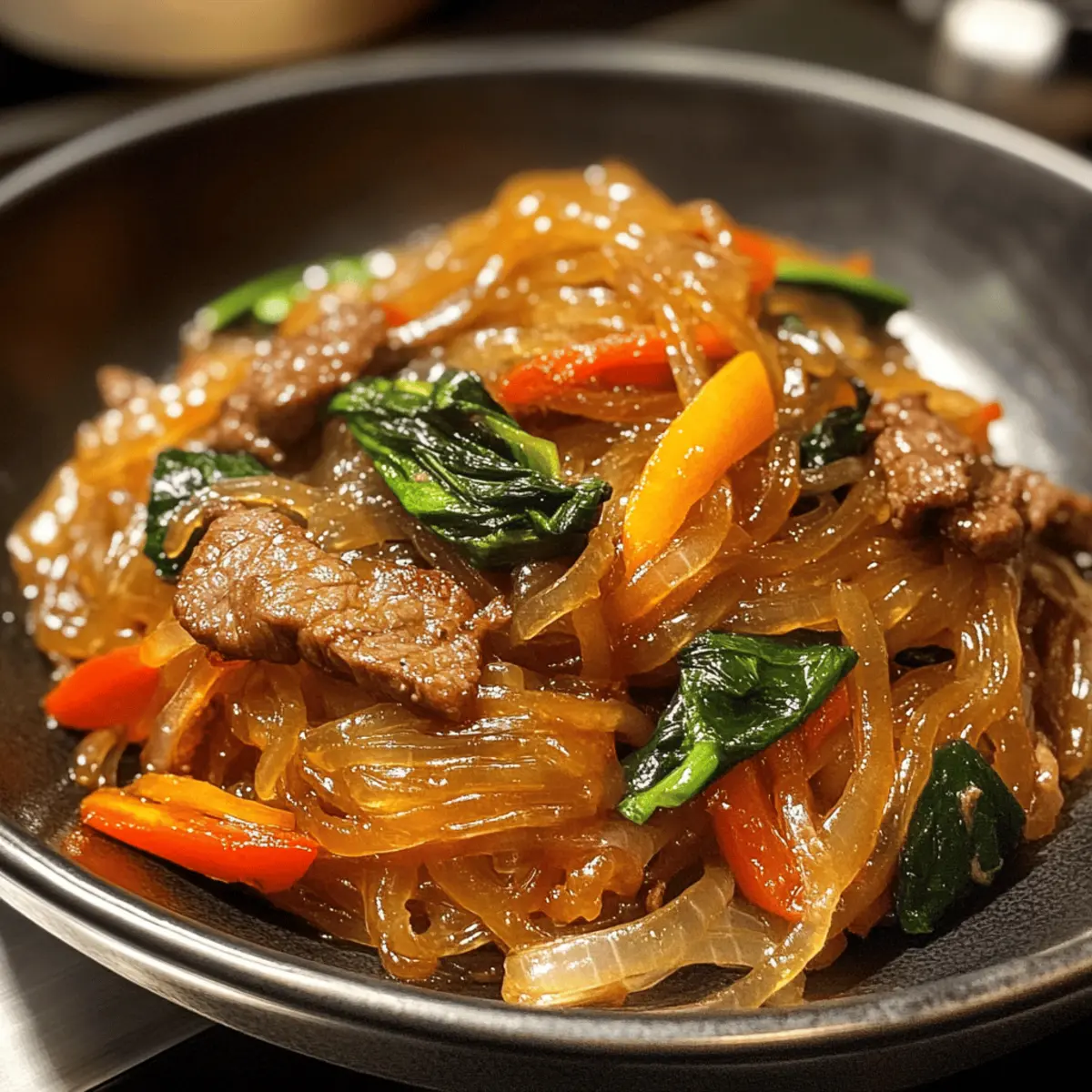
Return the beef to the skillet with the sautéed vegetables. Add the drained sweet potato glass noodles, along with the soy sauce and sesame oil. Toss everything together thoroughly for about 2-3 minutes, making sure the noodles are well coated and heated through. You should see a glossy sheen on the noodles, indicating they are ready.
Step 5: Serve and Garnish
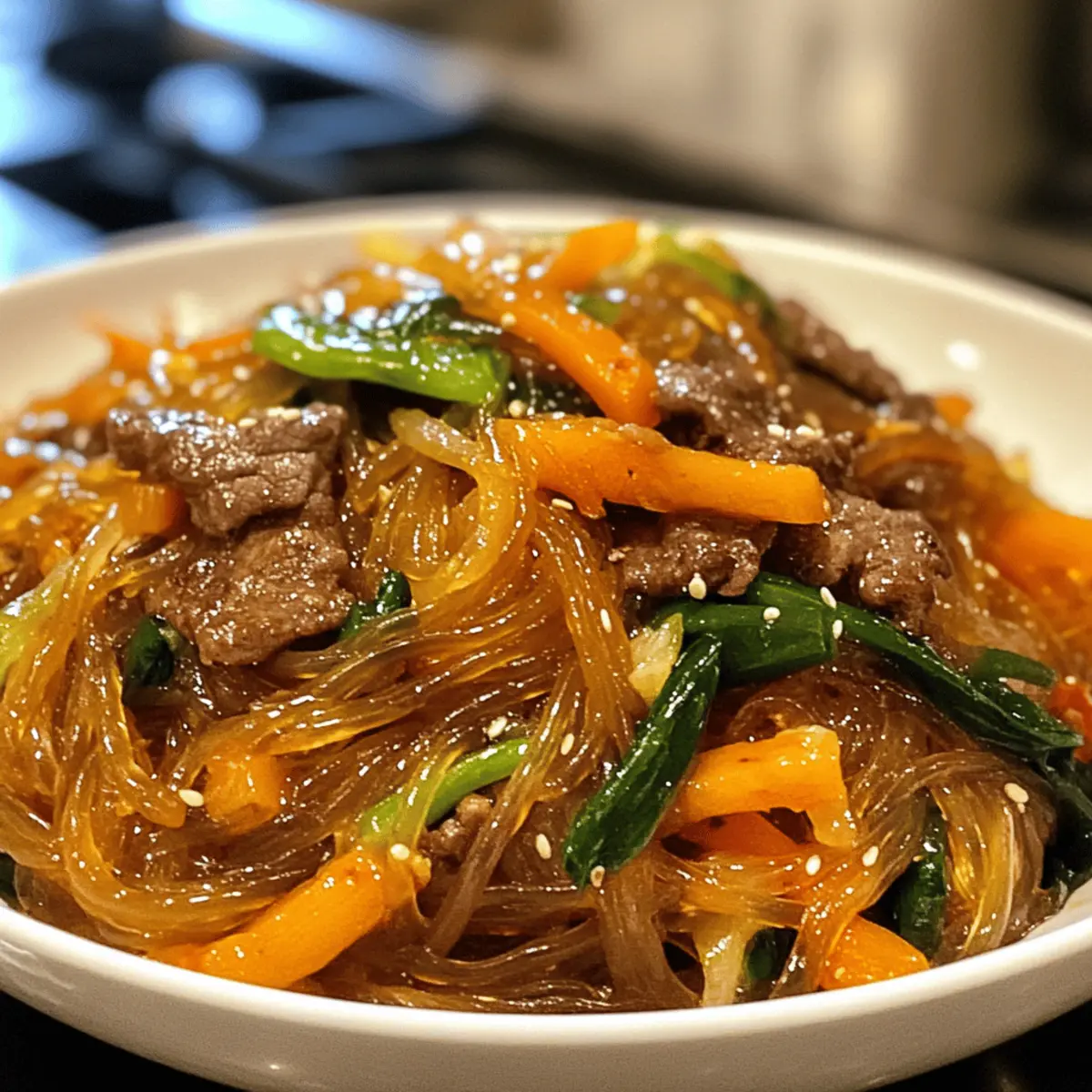
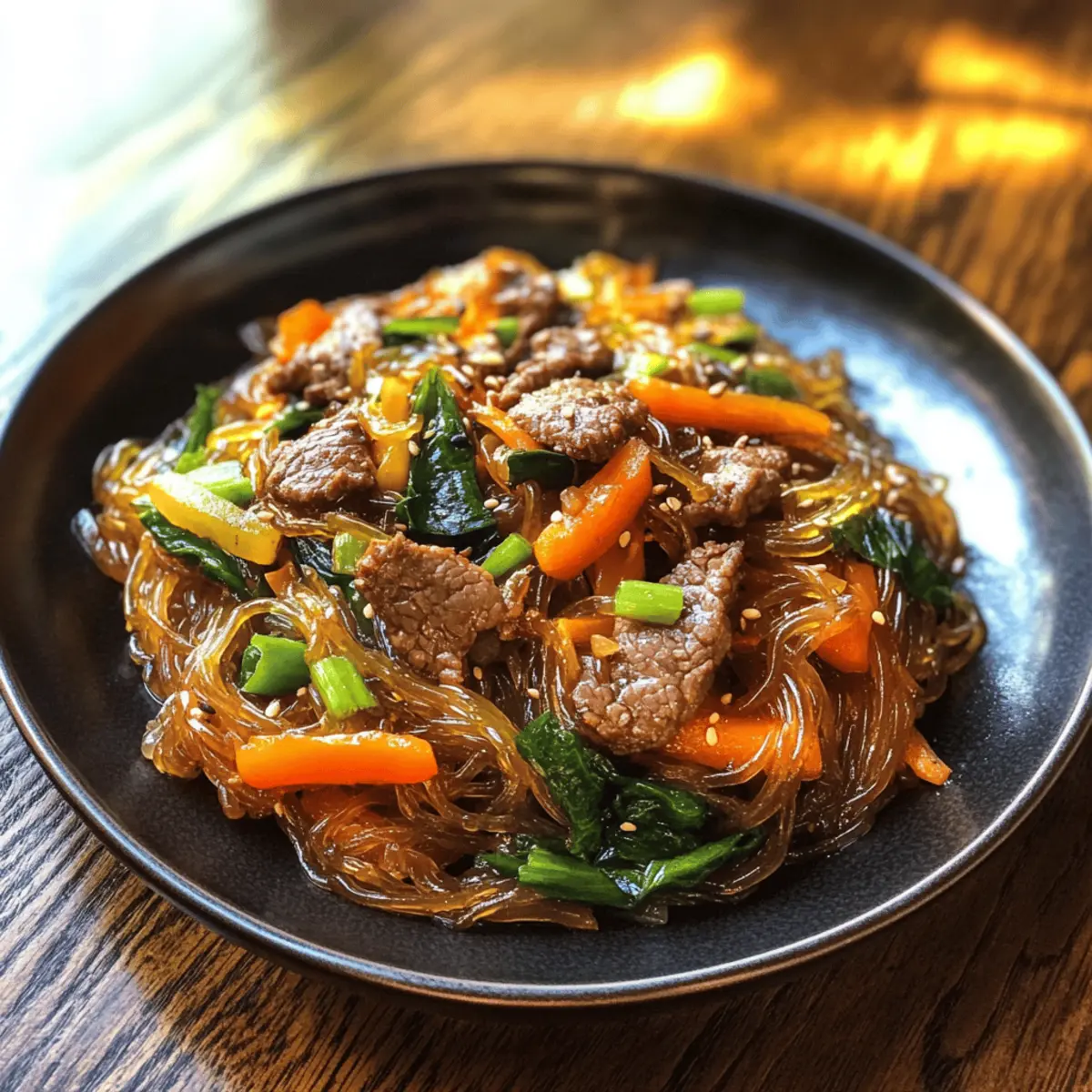
Transfer the delicious Korean Japchae to a serving dish, making it visually appealing with the colorful vegetables and tender meat. Garnish with chopped green onions for a touch of freshness and an extra pop of color. Enjoy this comforting dish warm, sharing the delightful flavors with family and friends.
What to Serve with Korean Japchae
Embrace the culinary experience by pairing this vibrant stir-fry with complementary sides for a complete meal.
-
Korean Barbecue: The smoky flavors of grilled meats perfectly contrast with the sweet and savory profile of Japchae, creating an unforgettable dining experience. Picture the sizzling sound of meat on the grill as you gather with loved ones—it’s a match made in flavor heaven.
-
Crisp Salad: A refreshing green salad with a tangy vinaigrette will elevate your meal. The bright acidity cuts through the richness of the noodles, balancing each bite.
-
Steamed Rice: Light and fluffy rice acts as a perfect base to soak up the delicious sauce of the Japchae, enhancing every spoonful and making it feel cozy and homely.
-
Korean Kimchi: This spicy and tangy side dish adds an extra zing to your meal! The fermentation depth of kimchi complements the noodles beautifully, offering a delightful contrast in flavors.
-
Cucumber Soup: A cool, refreshing cucumber soup can work wonders on hot days. A sip of this light dish will cleanse your palate, making it a delightful starter before savoring your Japchae.
-
Sangria or Iced Green Tea: A fruity sangria adds a playful twist to your meal, while a glass of iced green tea will refresh your senses, balancing the savory elements present in the Japchae.
-
Sesame Cookies: End your meal on a sweet note with crispy sesame cookies. Their nutty flavor and crunch will be a comforting finish to the flavorful richness of the Japanese dish.
Tips for the Best Korean Japchae
• Noodle Soaking: Soak the sweet potato glass noodles until fully softened; under-soaking may lead to a mushy texture when cooking.
• High Heat Cooking: Use high heat for stir-frying to ensure the beef and vegetables cook quickly, preserving their flavor and texture.
• Taste Adjustment: Always taste and adjust the seasoning towards the end; adding soy sauce gradually allows for customized flavor in your Korean Japchae.
• Vegetable Variety: Mix and match vegetables for added nutrition and color; seasonal favorites or what’s available in your fridge can enhance this dish.
• Storing Leftovers: When refrigerating, store in an airtight container. Add a splash of water before reheating to prevent dryness in the noodles.
How to Store and Freeze Korean Japchae
Fridge: Store your leftover Korean Japchae in an airtight container for up to 3 days. Ensure it’s completely cooled before sealing to maintain its freshness.
Freezer: To freeze, portion your Korean Japchae into freezer-safe bags or containers, removing as much air as possible. It can last in the freezer for up to 3 months.
Reheating: When ready to enjoy, thaw in the refrigerator overnight. Reheat gently in a skillet over medium heat, adding a splash of water or oil to prevent sticking and revive the noodles.
Make-Ahead Tip: This dish can be made ahead of time for gatherings. Just prepare and store according to these guidelines, ensuring everyone enjoys the delightful flavors fresh!
Variations & Substitutions for Korean Japchae
Feel free to personalize your Korean Japchae to suit your dietary needs and flavor preferences!
- Vegetarian: Swap the beef for tofu or tempeh for a hearty plant-based twist that absorbs the flavors beautifully.
- Spicy Kick: Add gochujang or fresh chili peppers during cooking to spice things up for heat lovers.
- Flavorful Chicken: Substitute beef with chicken slices for a lighter protein option packed with flavor.
- Seafood Delight: Add shrimp for a delightful seafood alternative that complements the sweet potato noodles perfectly.
- Nutty Flavor Boost: Sprinkle in some chopped peanuts or sesame seeds before serving for added texture and a nutty crunch.
- Veggie Variety: Incorporate seasonal vegetables like mushrooms or broccoli for extra nutrients and vibrant colors.
- Gluten-Free: Use tamari in place of soy sauce for a gluten-free option that maintains the rich flavor.
- Crunchy Greens: Toss in some bok choy or snap peas for an extra crunch and a touch of freshness.
These variations allow your Japchae to shine in new ways! Whether it’s a quick weeknight meal or a festive spread alongside your favorite dishes, don’t hesitate to experiment and make this recipe your own. For a perfect pairing, consider serving it with Korean barbecue or a light salad!
Make Ahead Options
Korean Japchae is a fantastic option for meal prep, making your busy weeknights so much easier! You can prepare all components up to 3 days in advance. Start by soaking the sweet potato glass noodles and chopping your vegetables, then store them separately in airtight containers in the refrigerator to maintain freshness. For the beef, cook it in advance and refrigerate as well, ensuring it stays tender and flavorful. When you’re ready to enjoy, simply stir-fry everything together with soy sauce and sesame oil, adding a splash of water or oil if needed to rehydrate. This way, your Korean Japchae will be just as delicious, saving you valuable time in the kitchen!
Korean Japchae Recipe FAQs
What type of sweet potato glass noodles should I use?
For the best texture and flavor, use traditional Korean sweet potato glass noodles, often labeled as “dangmyeon.” Look for a package that states they need to be soaked before cooking to achieve that perfect chewy consistency.
How should I store leftover Korean Japchae?
Absolutely! Store your leftover Korean Japchae in an airtight container, ensuring it’s completely cooled first. It will stay fresh in the fridge for up to 3 days. Just remember to reheat it gently on the stove, adding a dash of water or oil to prevent the noodles from sticking together.
Can Korean Japchae be frozen?
Yes, you can freeze Korean Japchae! Portion it into freezer-safe bags or containers, making sure to remove as much air as possible. It can remain in the freezer for up to 3 months. When you’re ready to enjoy it, simply thaw it in the fridge overnight and reheat in a skillet with a pinch of water or oil for a delightful meal.
How do I prevent the glass noodles from becoming mushy when cooking?
For optimal results, soak the sweet potato glass noodles until they are fully softened, about 30 minutes. Avoid under-soaking, as this can lead to mushiness during cooking. When stir-frying, use high heat to quickly seal in the texture, ensuring that each bite remains chewy and delightful.
Are there dietary considerations for Korean Japchae?
Korean Japchae can be easily made vegetarian by substituting beef with tofu or your favorite plant-based protein. Keep an eye on allergens like gluten (from soy sauce) and sesame (from sesame oil). It’s also a wonderful dish to share with friends and family, making it perfect for any gathering!
Can I customize the vegetables in my Korean Japchae?
Very! Feel free to mix and match your favorite seasonal vegetables, such as bell peppers, spinach, or even mushrooms. Each choice brings a different flavor and texture, creating a unique twist on this classic dish. The more, the merrier!
Delicious Korean Japchae: Your New Comfort Food Classic
Ingredients
Equipment
Method
- Soak sweet potato glass noodles in warm water for about 30 minutes, then drain well and set aside.
- Heat a tablespoon of oil in a large skillet over medium-high heat. Add sliced beef and stir-fry for 3-5 minutes until browned, then remove from skillet.
- In the same skillet, add more oil if needed and stir-fry mixed vegetables for about 4-5 minutes until tender but still crisp.
- Return beef to skillet with vegetables, add drained noodles, soy sauce, and sesame oil. Toss for 2-3 minutes until heated through.
- Serve warm, garnished with chopped green onions.
Leave a Reply