
As I stood in my kitchen, the delightful aroma of honey and nuts wafted through the air, instantly transporting me to a sunlit Mediterranean market. This is where the inspiration for my Baklava Cheesecake was born—a mouthwatering fusion that bridges two iconic desserts into one extraordinary treat. This luscious cheesecake features a creamy filling nestled atop a flaky crust that echoes the beloved textures of traditional baklava. Plus, it’s a fantastic crowd-pleaser and can easily be adapted to suit gluten-free or dairy-free diets, making it perfect for any gathering or a sweet weeknight indulgence. Are you ready to whip up this showstopper that will have everyone asking for seconds?
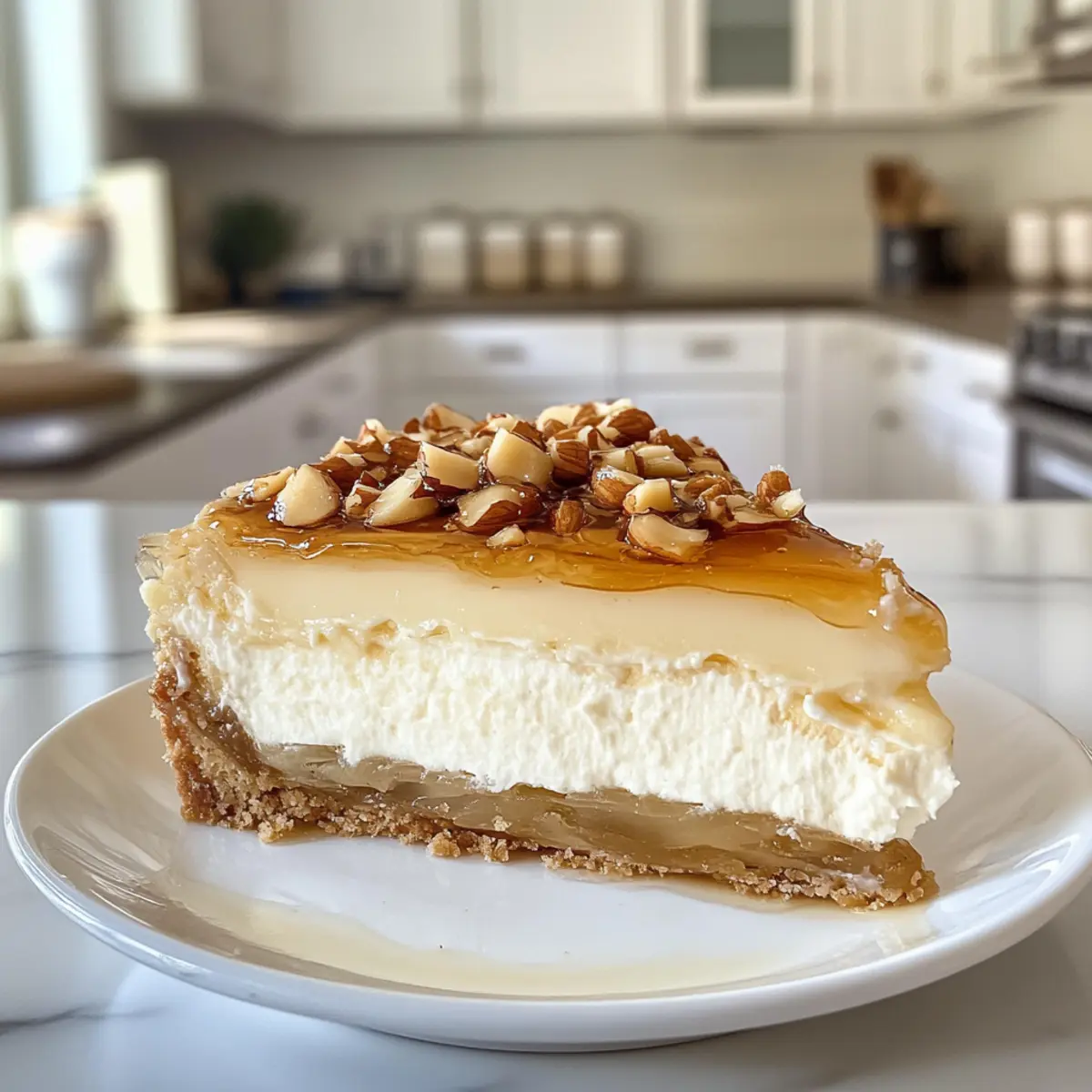
Why is Baklava Cheesecake so special?
Indulgent Flavor: This Baklava Cheesecake marries the creamy richness of traditional cheesecake with the flaky, nutty layers of baklava, offering a dessert experience like no other.
Versatility: Easily adaptable for gluten-free and dairy-free diets, ensuring everyone can enjoy this sweet delight.
Crowd-Pleasing: Perfect for celebrations or casual dinners, it consistently impresses guests with its stunning presentation and incredible taste.
Simplicity Made Stylish: Despite its elegant appearance, the recipe is straightforward, requiring no advanced baking skills.
Whether you’re a seasoned chef or just starting, this delightful creation is sure to become a go-to dessert in your repertoire. For more unique cheesecake experiences, check out our Vanilla Bean Cheesecake or indulge in a flavorful twist with Garten Pumpkin Cheesecake.
Baklava Cheesecake Ingredients
• Dive into the layers of this delightful dessert with these must-have ingredients!
-
For the Crust
-
Graham Cracker Crumbs – Provides a sweet and crunchy crust; use gluten-free crumbs for a gluten-free option.
-
Melted Butter – Binds the crust ingredients together and adds richness; substitute with coconut oil for a dairy-free variant.
-
For the Filling
-
Cream Cheese – The primary filling ingredient that provides creaminess; vegan cream cheese can be substituted for a dairy-free version.
-
Sugar – Sweetens the cheesecake and balances flavors; consider using organic coconut sugar for a healthier choice.
-
Eggs – Adds structure to the filling; ensure they are at room temperature for better mixing.
-
Sour Cream – Contributes tanginess and a smooth texture; Greek yogurt makes for a lighter alternative.
-
Chopped Nuts (e.g., walnuts, pistachios) – Adds texture and traditional baklava flavor; any preferred nut can be substituted.
-
Honey – Sweetens and enhances the baklava theme; maple syrup serves as a great vegan-friendly sweetness option.
-
Phyllo Pastry – Forms a delicate and flaky crust; ensure thawed before layering; gluten-free phyllo can also suit dietary needs.
Let your ingredients shine through the preparation and bring this Baklava Cheesecake to life!
Step‑by‑Step Instructions for Baklava Cheesecake
Step 1: Prepare Oven & Pan
Start by preheating your oven to 325°F (160°C) and greasing a 9-inch springform pan. This ensures that your Baklava Cheesecake will release easily once chilling is complete. Set the pan aside while you begin making the crust, ensuring the environment is ready to achieve that perfect creamy texture.
Step 2: Make Crust
In a mixing bowl, combine the graham cracker crumbs with melted butter until well mixed. The mixture should resemble wet sand; it’s crucial for binding the crust. Press this crumb mixture firmly into the bottom and up the sides of the springform pan, forming an even layer. This crust will create the delightful base for your Baklava Cheesecake.
Step 3: Prepare Filling
In a large mixing bowl, beat the cream cheese and sugar together until smooth and creamy, about 2-3 minutes. Add the eggs one at a time, blending well after each addition to ensure a silky filling. Finally, gently fold in the sour cream until fully incorporated, creating a mixture that looks luscious and inviting for your cheesecake.
Step 4: Combine Nuts & Pour
Add the chopped nuts into the cream cheese mixture, stirring gently to ensure an even distribution. This step adds that quintessential baklava flavor. Once mixed, pour the filling evenly over the prepared crust in the springform pan, smoothing the top with a spatula for a polished appearance.
Step 5: Bake
Carefully place the springform pan in the preheated oven and bake for 50-60 minutes. The Baklava Cheesecake is done when the edges are set, but the center remains slightly jiggly, akin to a wobbly custard. Keep an eye on it towards the end of baking to avoid overdoing the lovely creamy texture.
Step 6: Cool & Top
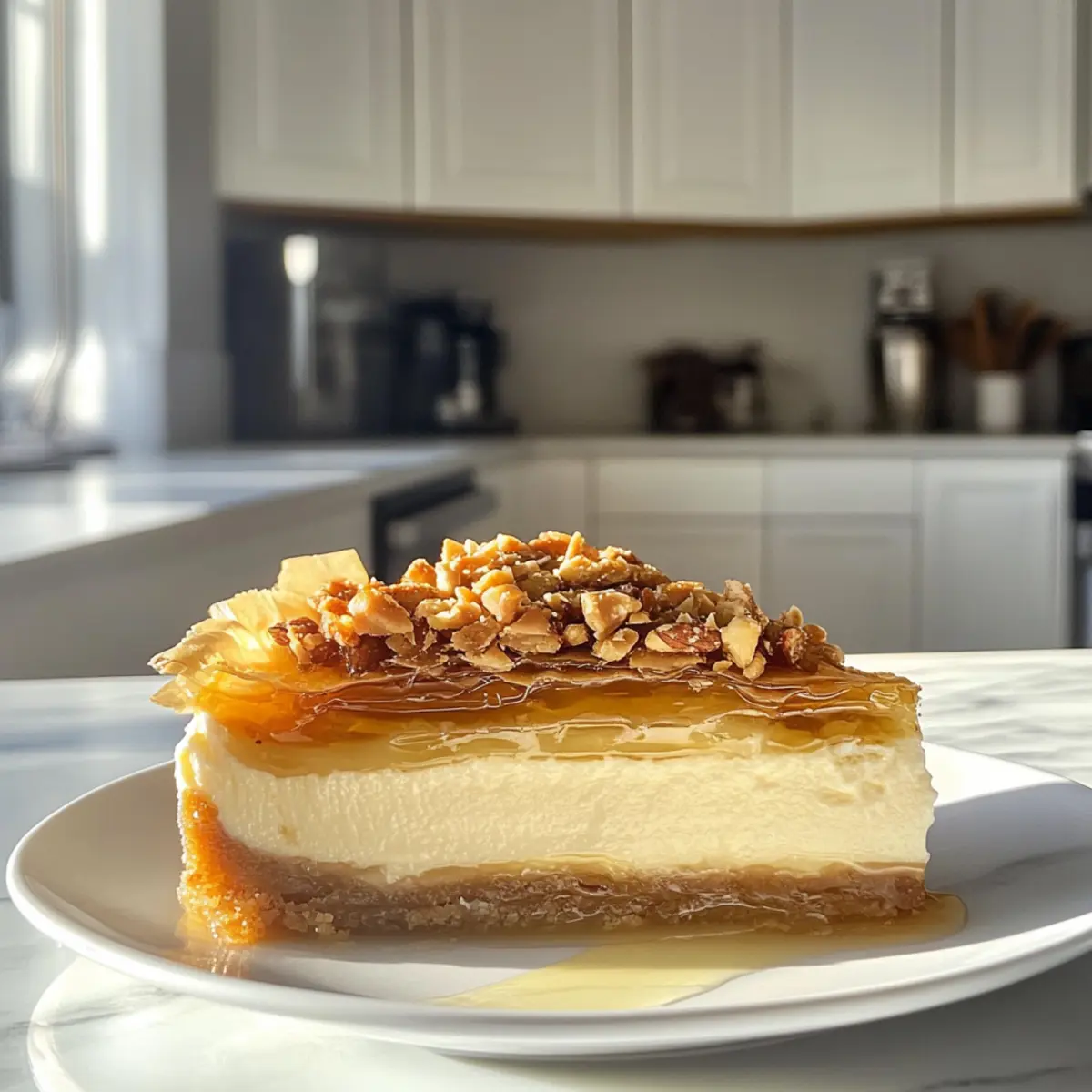
Once baked, turn off the oven, but keep the cheesecake inside for an additional hour to cool gradually, which helps prevent cracking. After the hour, remove the cheesecake and allow it to cool completely at room temperature. Drizzle with honey before serving for a beautiful finish that complements the creamy, nutty layers.
Expert Tips for Baklava Cheesecake
-
Room Temperature Eggs: Ensure your eggs are at room temperature before mixing. This will help create a smooth filling and avoid a lumpy texture.
-
Avoid Overmixing: When combining your filling, mix just until smooth. Overmixing can incorporate too much air, which may cause cracks in your Baklava Cheesecake during baking.
-
Water Bath Method: For a creamier finish and to prevent cracks, consider using a water bath. Place the springform pan inside a larger baking pan filled with water; this maintains moisture while baking.
-
Chill Overnight: Letting your cheesecake chill overnight enhances its flavor and texture. Patience pays off when it comes to developing those rich, layered tastes.
-
Substitution Quick Guide: If you need a gluten-free option, swap regular graham cracker crumbs with gluten-free ones. Likewise, for a dairy-free version, use vegan cream cheese and coconut oil in the crust.
-
Revive Leftovers: When serving leftovers, allow the cheesecake to warm at room temperature for about 30 minutes for the best flavor and texture experience.
Baklava Cheesecake Variations & Substitutions
Get ready to unleash your creativity by customizing your delightful Baklava Cheesecake with these exciting twists!
-
Nutty Options: Experiment with almonds or pecans instead of walnuts or pistachios for a different flavor profile. Each nut brings a unique crunch and richness to your cheesecake.
-
Spice it Up: Add warm spices like cardamom or nutmeg to the filling for an aromatic twist. These spices can take your Baklava Cheesecake to a whole new level of deliciousness.
-
Sweet Alternatives: Substitute honey with maple syrup for a vegan-friendly sweetness. This swap not only ensures everyone can enjoy it but also adds a subtle depth of flavor.
-
Texture Choices: Try using toasted coconut in place of nuts for a tropical flair. The coconut will give your cheesecake a lovely crunch while introducing a refreshing taste.
-
Dairy-Free Delight: For a fully dairy-free version, utilize vegan cream cheese and almond milk for a lighter alternative. Your cheesecake will still be rich and creamy, without the dairy!
-
Berry Bliss: Top with fresh berries like raspberries or blueberries for a pop of color and flavor. The tartness balances out the sweetness beautifully.
-
Chocolate Lovers: Incorporate chocolate chips or a swirl of chocolate ganache into the filling for an indulgent twist. This added richness pairs wonderfully with the nutty elements.
-
Fruity Fusion: You can blend in pureed fruit like peaches or apricots into the filling for a burst of natural sweetness. This fruity addition provides a lovely contrast to the traditional flavors.
For more delicious ideas that showcase creamy textures and vibrant flavors, don’t forget to explore our Pumpkin Cheesecake Truffles or dive into the indulgence of Strawberry Cheesecake Cinnamon Rolls. Enjoy your baking journey!
How to Store and Freeze Baklava Cheesecake
Fridge: Keep your leftover Baklava Cheesecake in an airtight container in the refrigerator for up to 5 days to maintain its creaminess and flavor.
Freezer: For longer storage, wrap slices securely in plastic wrap and place in a freezer-safe container. It can be frozen for up to 2 months without losing its delightful taste.
Thawing: When ready to enjoy, transfer the cheesecake to the fridge to thaw overnight or leave it at room temperature for about 2 hours before serving.
Serving Leftovers: For the best experience, let the cheesecake sit at room temperature for 30 minutes before serving to regain its creamy texture and flavor.
What to Serve with Baklava Cheesecake?
Delightfully complement your decadent cheesecake with these delicious pairings that will enhance your dessert experience.
-
Dollop of Whipped Cream:
A light, airy topping that adds creaminess and a beautiful contrast to the rich textures of the cheesecake. -
Turkish Coffee:
The robust flavors of this traditional coffee cut through the sweetness of the Baklava Cheesecake, creating a perfect balance. -
Fresh Berries:
Juicy, tart berries add a refreshing burst and vibrant color, enhancing the visual appeal while balancing the richness of the dessert. -
Pistachio Crumble:
A sprinkle of chopped pistachios on top elevates the presentation and adds an extra nutty crunch that mirrors the flavors within. -
Rose Water Gelato:
Serves as a fragrant and creamy counterpart, bringing floral notes that pair harmoniously with the nutty undertones of the cheesecake. -
Mint Tea:
A warm cup of mint tea cleanses the palate and introduces a refreshing note that complements the sweet, rich dessert beautifully. -
Honey Drizzle:
A light drizzle adds an extra layer of sweetness, echoing the honey flavor in the Baklava Cheesecake and highlighting its layers. -
Ice Cream Sandwich:
Serve slices with a scoop of nut-flavored ice cream for an indulgent twist, combining creamy and crunchy textures with delightful flavor contrasts.
Make Ahead Options
These Baklava Cheesecake preparations are a game-changer for busy home cooks! You can prepare the crust up to 24 hours in advance by mixing the graham cracker crumbs and melted butter, then pressing it into the springform pan. Just cover it tightly and refrigerate. Additionally, the cheesecake filling can be made 3 days ahead. Simply mix your cream cheese, sugar, eggs, and chopped nuts, and store it in an airtight container in the refrigerator. When you’re ready to bake, pour the filling over the crust and follow the baking instructions as usual. This way, you can enjoy a decadent, time-saving dessert that’s just as delicious as if you made it all at once!
Baklava Cheesecake Recipe FAQs
Which nuts are best for Baklava Cheesecake?
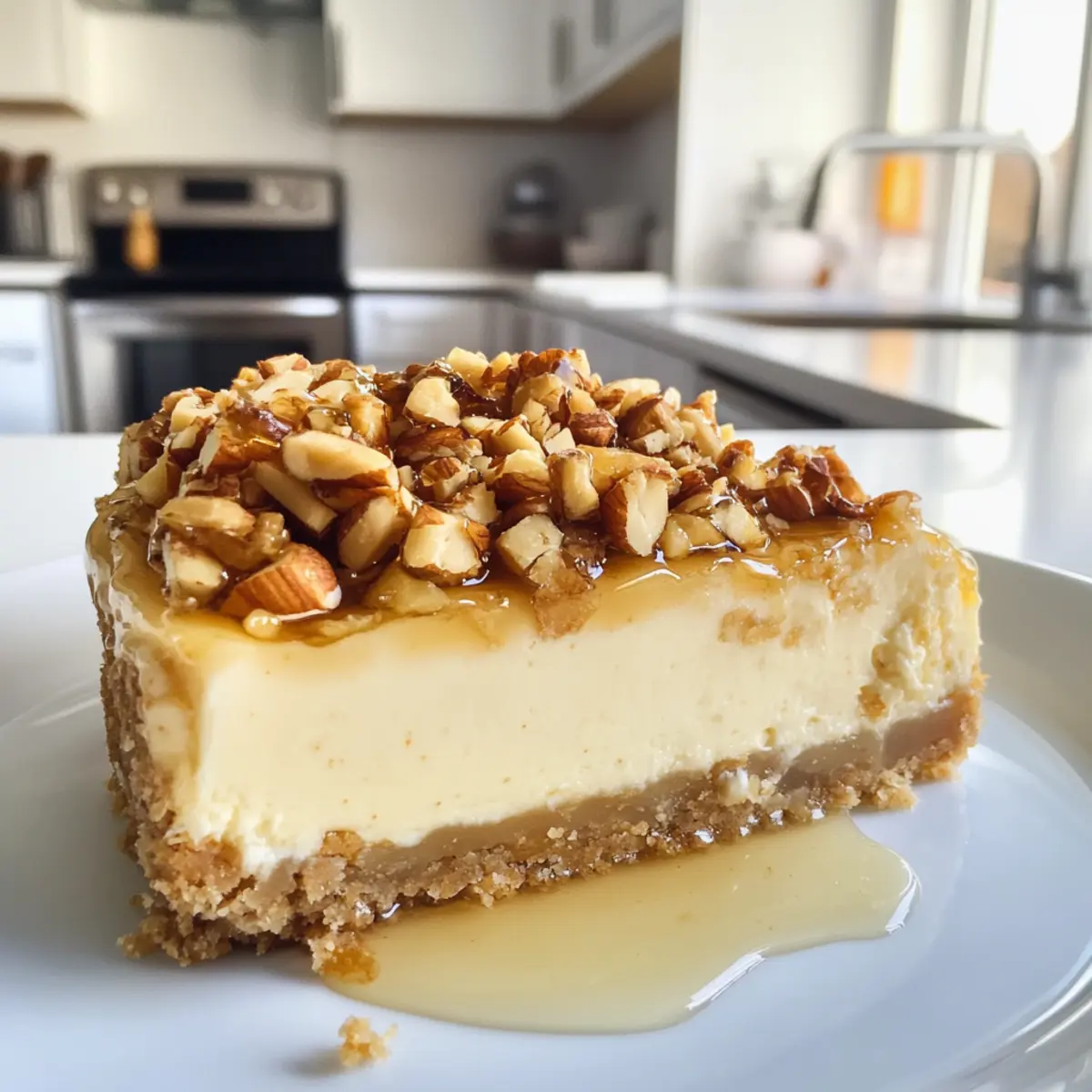
Absolutely! Classic choices for Baklava Cheesecake include walnuts and pistachios, which embody the traditional baklava flavor. However, feel free to experiment with almonds or pecans for a different twist! Just ensure they are chopped finely to blend seamlessly into the creamy filling.
How should I store leftover Baklava Cheesecake?
To keep your leftover Baklava Cheesecake fresh, store it in an airtight container in the fridge for up to 5 days. This preserves its creamy texture and delectable flavor. When ready to enjoy, I recommend letting it sit at room temperature for about 30 minutes for the best taste and texture experience.
Can I freeze Baklava Cheesecake?
Yes, you can! For long-term storage, wrap slices of Baklava Cheesecake tightly in plastic wrap and place them in a freezer-safe container. This way, it can be kept frozen for up to 2 months. When you’re ready to indulge, just transfer it to the fridge to thaw overnight, or let it sit at room temperature for about 2 hours before serving.
What should I do if my Baklava Cheesecake cracks?
If your cheesecake happens to crack, don’t worry! This can occur due to overmixing the filling or temperature changes during baking. To prevent this, mix your filling gently and avoid overbeating the eggs. Using a water bath technique while baking will also help retain moisture and create a creamier texture, reducing the likelihood of cracks.
Is Baklava Cheesecake suitable for people with dairy allergies?
Yes, indeed! You can easily make a dairy-free version of Baklava Cheesecake by substituting cream cheese for vegan cream cheese and using coconut oil in the crust instead of melted butter. Just make sure that any additional ingredients, like the nuts or sugar, are also free of dairy products.
How can I tell when my Baklava Cheesecake is done baking?
The perfect Baklava Cheesecake should bake for 50-60 minutes. You’ll know it’s done when the edges are set, but the center remains slightly jiggly, similar to a custard. It’s best to keep a close eye on it in the last few minutes of baking to achieve that delightful creamy texture without overbaking.
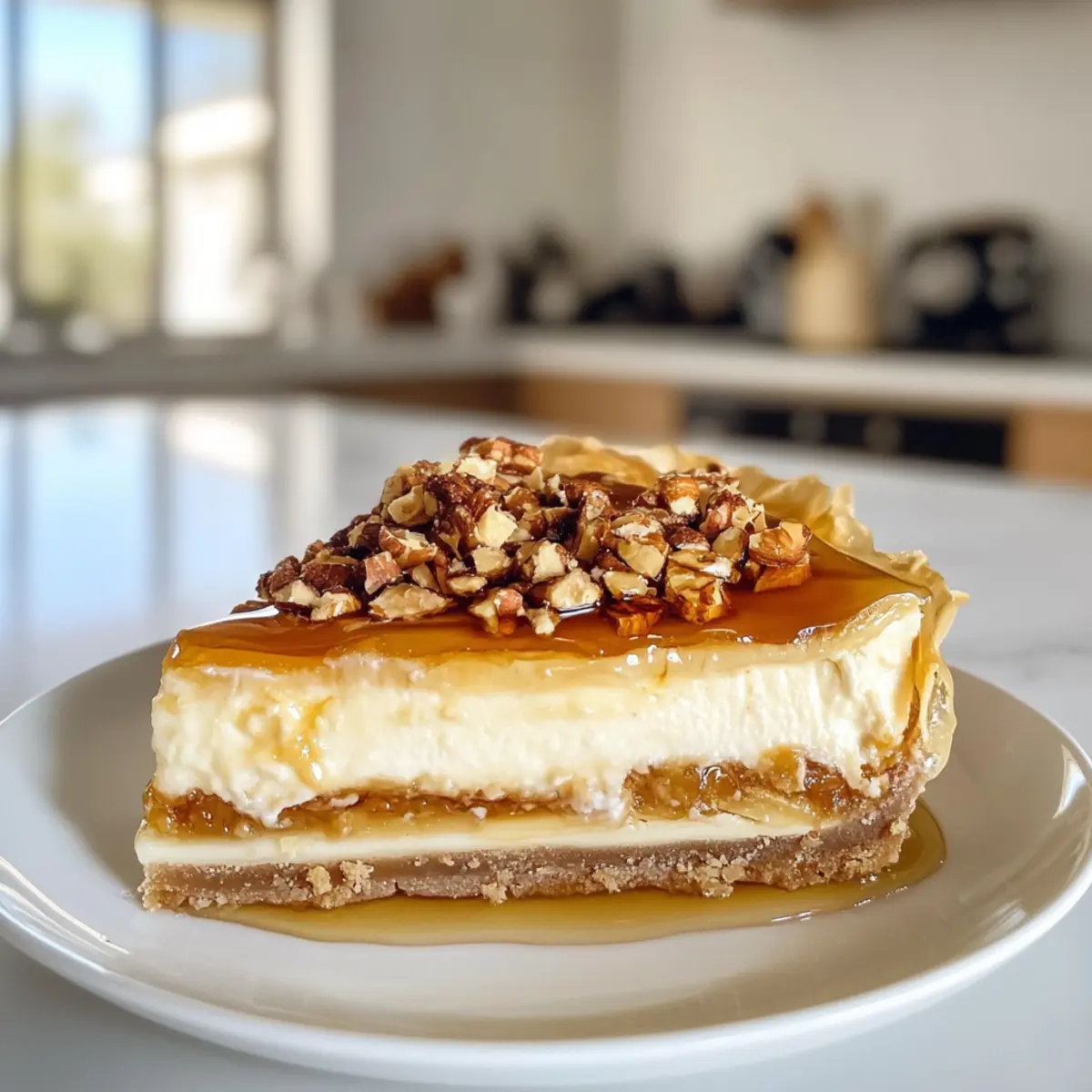
Heavenly Baklava Cheesecake: Indulge in Sweet Dreams
Ingredients
Equipment
Method
- Preheat your oven to 325°F (160°C) and grease a 9-inch springform pan.
- In a mixing bowl, combine the graham cracker crumbs with melted butter until well mixed. Press this mixture into the bottom and up the sides of the springform pan.
- In a large mixing bowl, beat the cream cheese and sugar together until smooth. Add the eggs one at a time, then gently fold in the sour cream.
- Add the chopped nuts into the cream cheese mixture and stir gently. Pour the filling evenly over the prepared crust, smoothing the top.
- Bake for 50-60 minutes until the edges are set but the center remains slightly jiggly.
- Turn off the oven and let the cheesecake cool inside for an additional hour. Then allow it to cool completely before drizzling with honey.
Leave a Reply